
Update — September 7, 2026: Since this review first went up, it was found that Bitfortun’s firmware inflates the hash rate it reports by roughly 400 GH/s (about 0.4 TH/s). In plain terms: the BS-1’s own dashboard — and any monitoring app that reads from it — shows more hash rate than the chip is actually producing. I’ve corrected every figure in this review to reflect real-world output: the BS-1 does about 5.2 TH/s at default and up to ~7.0 TH/s overclocked, not the higher numbers the device originally reported. It’s still a real generational leap — but I’d rather the specs here be honest. If you own one, subtract about 0.4 TH/s from whatever it tells you.
For the first time in a long while, home Bitcoin miners have access to the exact same ASIC chip powering the latest professional mining rigs. The new Bitfortun BS-1 uses Bitmain’s BM1373 chip, and it delivers a fivefold jump in hash rate over the previous generation right out of the box. In this guide, I’ll break down exactly what makes this device so exciting and put it head-to-head with the Bitaxe Gamma 601.
In this guide, you’ll learn:
- How ASIC chip generations (BM1370 vs. BM1373) affect home mining
- Why the Bitfortun BS-1 is a genuine leap forward for hobbyists
- Real benchmark results — up to 7.0 TH/s from a single chip
- How to tune the BS-1 for maximum efficiency (down to 12.1 J/TH)
- How the BS-1 stacks up against the Bitaxe Gamma 601
- Where to buy the Bitfortun BS-1 and how to check your mining odds
Table of Contents
- What Is the Bitfortun BS-1?
- Out-of-the-Box Performance: A Fivefold Jump
- Benchmarking the Bitfortun BS-1
- Chasing Efficiency: The Real Win for Home Miners
- Bitfortun BS-1 vs. Bitaxe Gamma 601
- Where to Buy the Bitfortun BS-1
- What Comes Next Is Even More Exciting
- Watch the Full Video Guide
- Frequently Asked Questions
- More Bitcoin Mining Guides
What Is the Bitfortun BS-1?
The Bitfortun BS-1 is a single-chip home Bitcoin mining device — the same category as the Bitaxe, NerdAxe, and OctAxe machines many of us already run at home. What sets it apart is the chip inside it. Instead of the BM1370 we’ve been using in home miners, the BS-1 packs the BM1373, the very same ASIC chip Bitmain uses in its flagship professional Antminer S23.
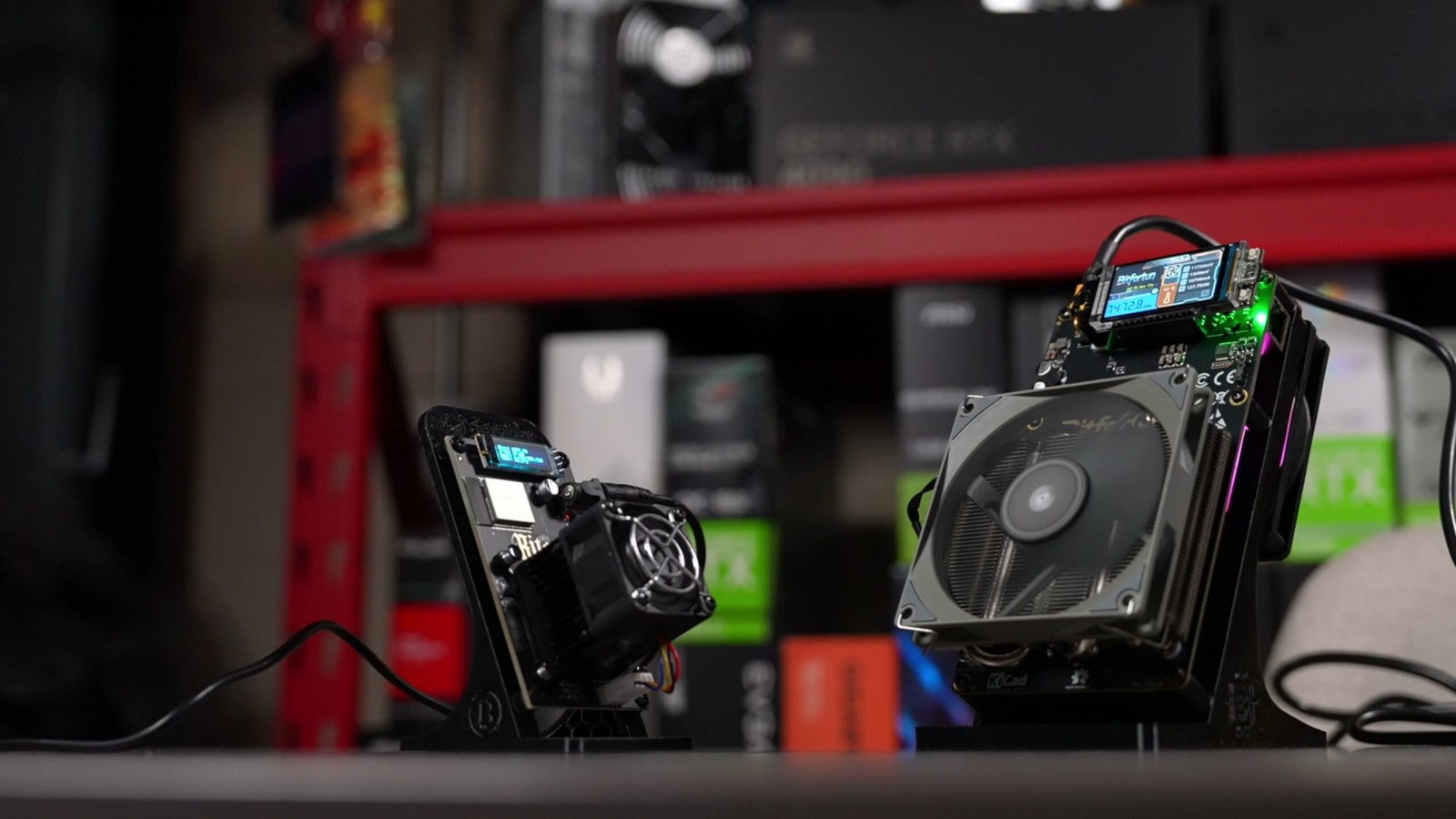
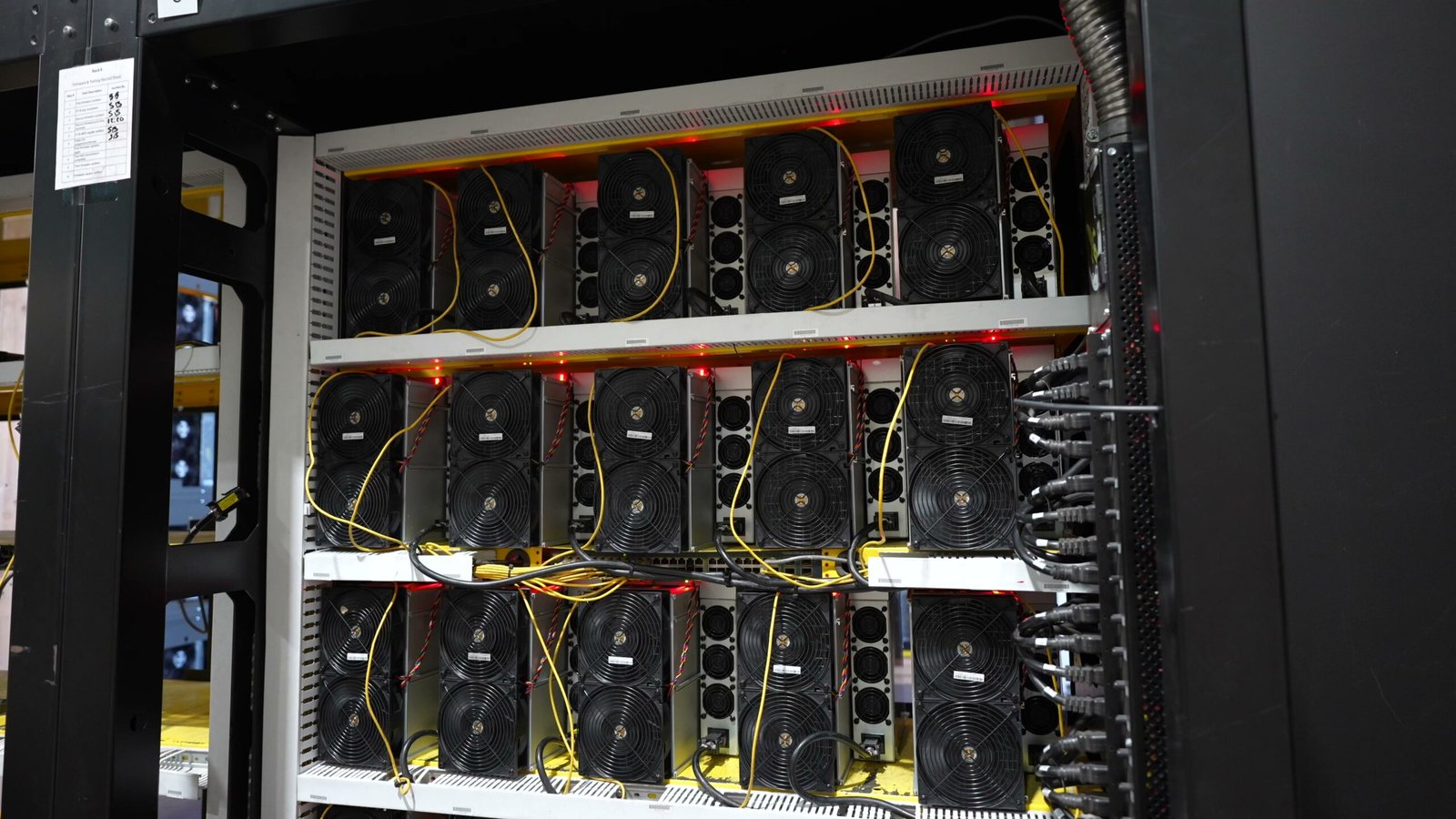
That’s a big deal. For years, what’s been available to professional Bitcoin miners has been completely out of sync with what’s available to amateurs at home. The pros were running the newest chips while we were a generation behind. With the BS-1, that gap has closed — for the first time in a long time, we’re actually in sync with the professionals.
Why Chip Generations Matter
Bitmain doesn’t publish official specs for the ASIC chips it designs, and it doesn’t disclose which chip versions live inside specific professional machines. But these devices always make their way into the world, and people love to open them up, tinker, discover their secrets, and share the results. Here’s what we’ve found:
- BM1370 — the previous generation, found in home devices like the Bitaxe Gamma 601, NerdAxe, and OctAxe. It also lived in the professional S21 Pro-era hardware.
- BM1373 — the latest and greatest, found inside the professional Antminer S23 and now inside the Bitfortun BS-1.
Moving from the BM1370 to the BM1373 brings significant gains in both raw performance and efficiency. That’s exactly what we’re going to test.
Out-of-the-Box Performance: A Fivefold Jump
The first thing I wanted to show you is that the BS-1 was running at its factory default frequency and default core voltage during my testing — nothing tweaked, nothing overclocked. If you open the box, plug it in, and set it up, this is exactly the level of performance you’ll see.
At default settings, the Bitfortun BS-1 produces roughly 5.2 terahashes per second from a single chip. Compare that to the previous-generation Bitaxe Gamma 601, which delivered a little over 1 terahash per second at its own defaults. That’s a fivefold jump in hash rate straight out of the box.
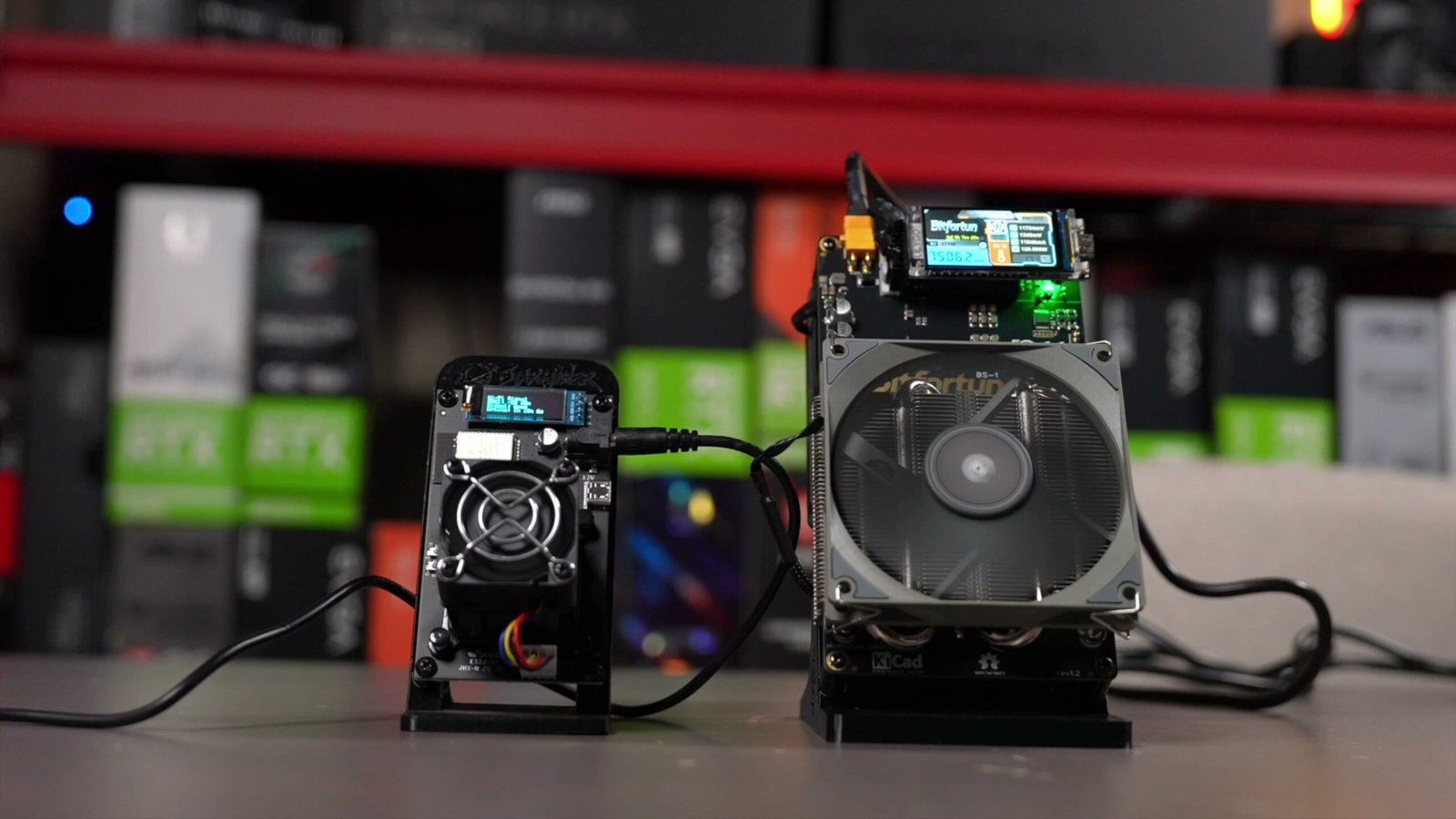
Is the BS-1 Being Pushed Too Hard?
When I saw 5.2 TH/s, I stopped and thought, “Wait a moment, this seems like too much.” The unofficial specs online suggest the BM1370 runs around 1.1–1.2 TH/s by default, while the BM1373 should run around 2.4–2.5 TH/s by default. So why was I seeing more than double that?
My theory — and I put it to the test — is that this ASIC chip is being pushed hard at its default settings. That raised two questions: Is there any headroom left to push it even further? And if it’s already maxed out, could I actually reduce the settings to gain efficiency instead? Both of those are worth testing.
Benchmarking the Bitfortun BS-1
To find out, I ran a benchmark using my favorite auto-tuning tool. If you want to set this up on your own home mining hardware, I’ve got a full walkthrough video on the process — it works across all these at home Bitcoin mining devices.
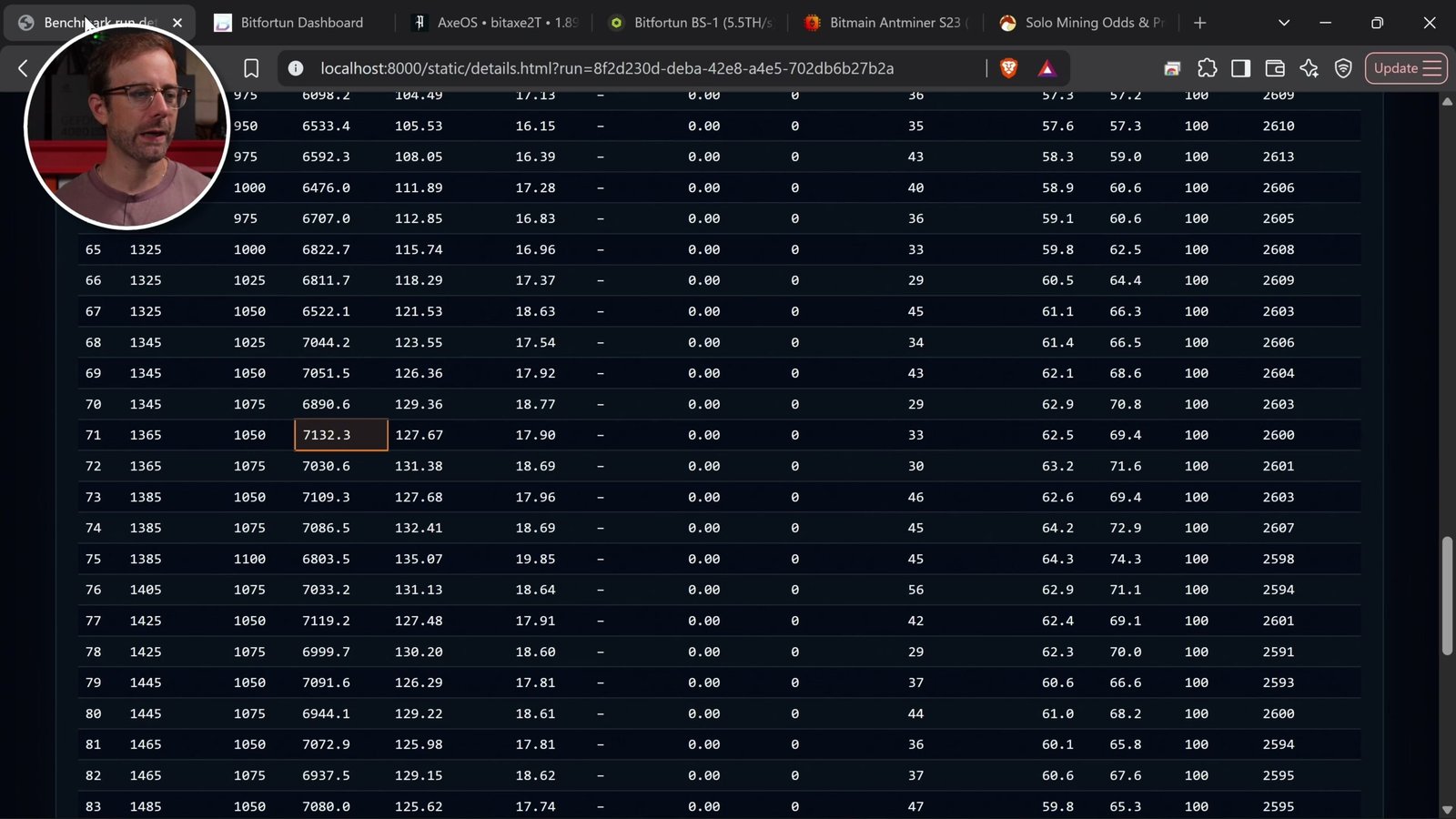
The benchmark starts at a set frequency and voltage, then gradually increases and adjusts things along the way. It keeps going until it hits a limit — either the hash rate stops improving, temperatures climb too high, or it needs to shut down — and then it reports back both the most efficient operating point and the highest performance the device can sustain.
The Results Were Insane
The test ran all the way to step 84 before hitting its limit, cycling through many combinations of core frequency and voltage. The peak sustained hash rate? A jaw-dropping 7.0 terahashes per second from a single ASIC chip.
Let that sink in. On the Bitaxe with its previous-generation chip, the highest I’ve ever been able to push a single chip is around 2 terahashes per second. The BS-1 more than triples that. I went from an already insane 5.1 TH/s at stock all the way up to 7.0 TH/s.
A Warning: Bitfortun Inflates the Reported Hash Rate
Here’s something every potential buyer needs to know: Bitfortun’s firmware inflates the hash rate it reports. The device’s AxeOS dashboard — and any monitoring app that reads from it, such as Hashwatcher — adds roughly 400 GH/s (about 0.4 TH/s) on top of what the chip is actually hashing. In other words, the number on your screen is higher than the real output, not lower. Every hash-rate figure in this review has that inflation removed and reflects the corrected, real-world performance.
Chasing Efficiency: The Real Win for Home Miners
Raw speed is exciting, but at 7.0 TH/s this device consumes a lot of energy — 126.8 watts reported in the software, and 166.5 watts measured from the wall socket. That’s far more than a little Bitaxe pulls. And since we pay residential electricity rates at home, efficiency matters a lot.
My belief was that the BS-1 is running near its maximum capacity right out of the box. If that’s true, I could dial back the hash rate and power consumption to gain efficiency. That’s where the benchmark’s efficiency data comes in handy.
Tuning for Peak Efficiency
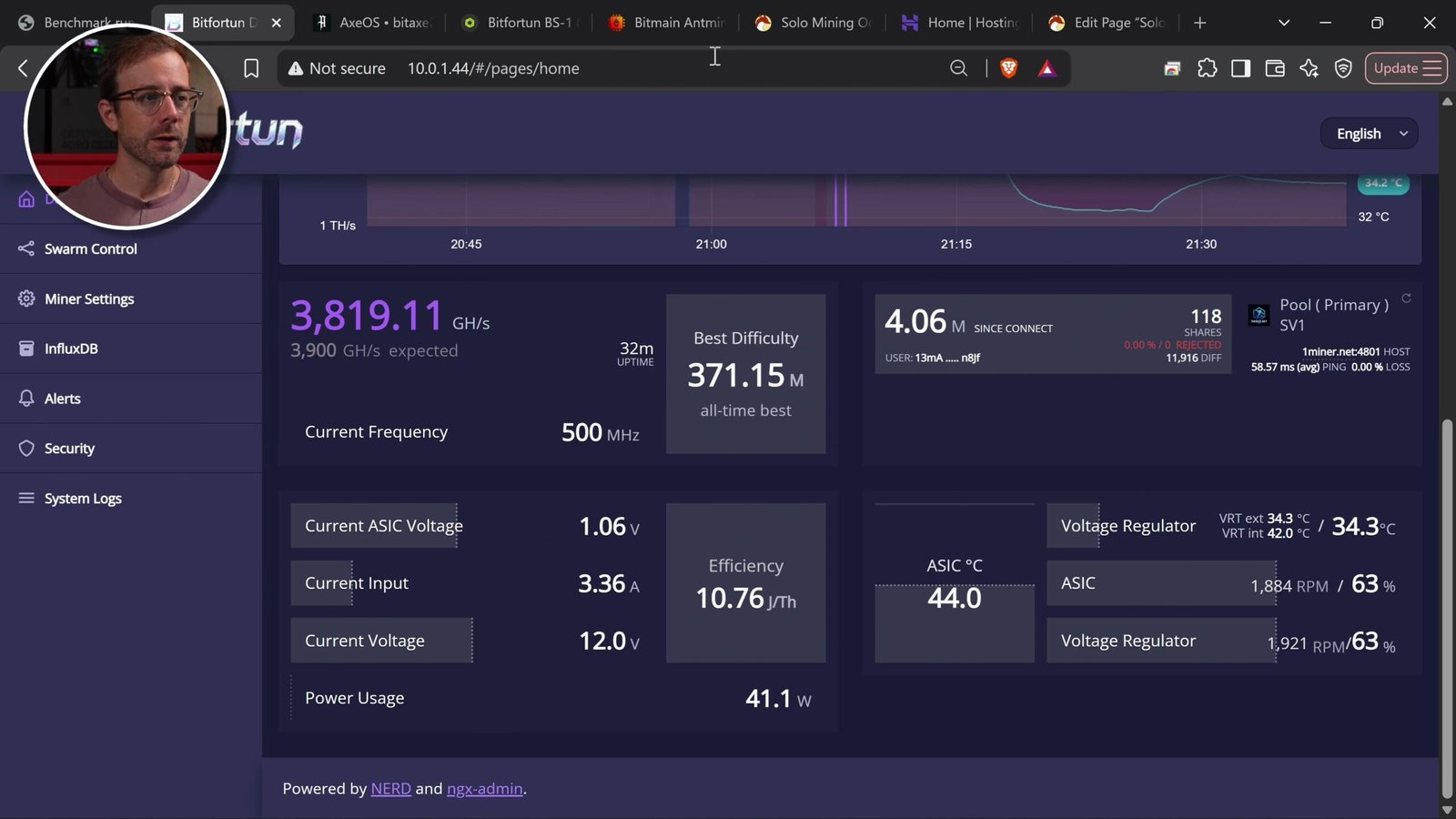
Following the most efficient settings from the auto-overclocking tool, I went into the mining settings and applied:
- Set the frequency to 500
- Set the core voltage to 1065
- Save the settings
- Restart the device and re-test the results
The outcome was remarkable. Efficiency dropped to 12.1 joules per terahash, with a hash rate around 3.4 TH/s and power consumption of no more than 41 watts in software — just 48.5 watts measured from the wall, fans and power supply included.
This is a level of efficiency that simply wasn’t available to home Bitcoin miners before. And here’s the kicker: the professional Antminer S23, using these exact BM1373 chips, advertises an efficiency of 11 J/TH. We hit basically the same number at home. That’s a genuine quantum leap for home mining.
Bitfortun BS-1 vs. Bitaxe Gamma 601
Here’s how the new generation stacks up against the device it’s replacing:
| Spec | Bitaxe Gamma 601 | Bitfortun BS-1 |
|---|---|---|
| ASIC Chip | BM1370 | BM1373 |
| Chip Generation | Previous (Antminer S1 Pro-class) | Latest (Antminer S23-class) |
| Default Hash Rate | ~1 TH/s | ~5.2 TH/s |
| Max Single-Chip Hash Rate | ~2 TH/s | ~7.0 TH/s |
| Best Efficiency Achieved | Higher J/TH | 12.1 J/TH |
| Power at Peak (from wall) | Lower | ~166.5 W |
| Power at Efficient Setting | — | ~48.5 W |
The trade-off is clear: the BS-1 sips or gulps power depending on how you tune it. Run it wide open for maximum hash rate, or dial it down to match professional-grade efficiency. Either way, it puts far more capability in your hands than the previous generation ever could.
Where to Buy the Bitfortun BS-1
The Bitfortun BS-1 is available now. I’ve already added it to the mining calculator on my website, so you can plug in how many you plan to run and check your odds of solo mining a Bitcoin block — or even Bitcoin Cash or DigiByte — along with potential revenue and how your efficiency affects your electricity bill. To purchase the BS-1 for yourself, check current availability.
What Comes Next Is Even More Exciting
Here’s the part that really gets me fired up: the BS-1 is just one of the first devices, and it’s a single chip. Now that the BM1373 is available for home use, we’re going to see 4-chip, 8-chip, 12-chip machines and beyond. Who knows where we’ll end up. I’m extremely excited about what’s coming, and I’m sure I’ll be covering a lot of these devices in the months and years ahead.
Watch the Full Video Guide
Want to see the benchmark run and the efficiency tuning in action? Watch the full video above — and subscribe to Red Fox Crypto so you don’t miss the next wave of BM1373 home miners as they arrive.
Frequently Asked Questions
What ASIC chip is inside the Bitfortun BS-1?
The BS-1 uses the Bitmain BM1373 chip — the same ASIC chip found in the professional Antminer S23. This is the first time this current-generation chip has been widely available to home miners.
How fast is the Bitfortun BS-1?
Out of the box at default settings, the BS-1 runs around 5.2 TH/s from a single chip. With overclocking, I pushed it all the way to 7.0 TH/s — though it consumes a lot of power at that level, up to 166.5 watts from the wall.
How does the BS-1 compare to the Bitaxe Gamma 601?
The Bitaxe Gamma 601 uses the older BM1370 chip and delivers about 1 TH/s at default (roughly 2 TH/s overclocked). The BS-1’s BM1373 chip delivers about 5.2 TH/s at default and up to 7.0 TH/s overclocked — a huge generational leap.
Can I tune the BS-1 for better efficiency?
Yes. By setting the frequency to 500 and the core voltage to 1065, I reached 12.1 joules per terahash at about 3.4 TH/s and only 48.5 watts from the wall. That matches the efficiency of the professional Antminer S23.
Does the Bitfortun BS-1 report its hash rate accurately?
No — it over-reports. Bitfortun’s firmware inflates the hash rate by roughly 400 GH/s (about 0.4 TH/s), so the AxeOS dashboard and monitoring apps like Hashwatcher show more than the chip is actually producing. Subtract about 0.4 TH/s from whatever the device reports to get the real figure — that’s what the numbers in this review reflect.